
Three Bioengineering PhD Students receive NIH F31 Fellowships

Three Bioengineering PhD students at the Swanson School of Engineering will receive funding toward their studies in 2026, thanks to prestigious awards from the National Institutes of Health (NIH).
NIH Predoctoral Individual National Research Service Award (F31) Recipients

Camila Garcia Padilla
Garcia Padilla is a 5th-year PhD student in the B.I.O.N.I.C. lab, advised by Takashi (TK) Kozai. Her research addresses a gap in brain-computer interface (BCI) design, which typically focuses on neurons while overlooking glial cells. Garcia Padilla is specifically interested in oligodendrocytes, the cells that myelinate neurons, and how they interact with BCIs both as a target for neuromodulation therapeutics and as key players in promoting neuronal survival around implanted devices. Her F31 project asks whether electrical stimulation delivered through a BCI can modulate oligodendrocyte activity to promote myelination, with the goal of designing pro-myelinating stimulation protocols that could eventually help treat neurodegenerative diseases where myelin is affected, such as multiple sclerosis and Alzheimer's disease.
Within this project, she is especially interested in how myelin protects parvalbumin (PV) neurons, inhibitory neurons that help compensate for the neuronal overactivation present in Alzheimer's disease but are especially vulnerable to damage, and whether increasing myelination on these neurons could help ameliorate cognitive decline. She also mentors high school students through the UPMC Hillman Cancer Center Academy and volunteers with Biobots, teaching science to elementary school students.
“I feel very fortunate to have the F31's support, as it means I get to spend the next stretch of my PhD working on a topic I find genuinely fascinating.” Garcia Padilla said. “It's very exciting to make even a small contribution toward an understudied area of Alzheimer's research. I'm hopeful this work can help open new therapeutic avenues for the disease, while also deepening our understanding of oligodendrocytes and their role in brain health more broadly.”
Jack Killinger
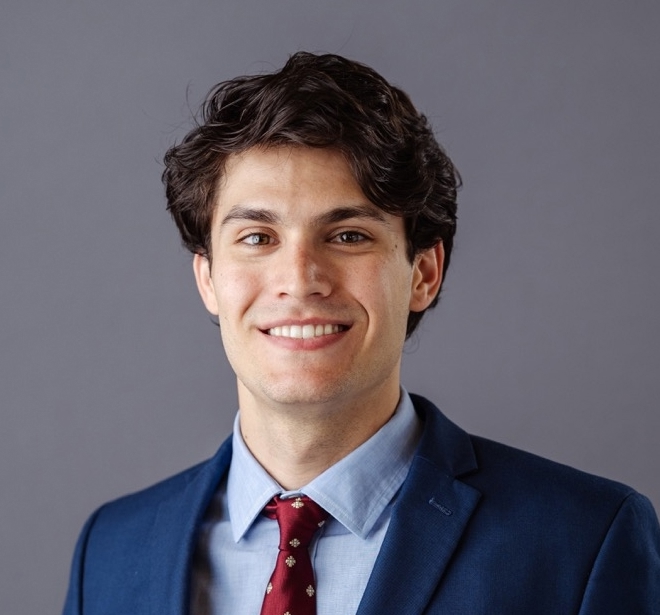
Killinger is a 3rd-year bioengineering PhD student in the Trauma and Transfusion Medicine Research Laboratory under the mentorship of Susan Shea and Matthew Neal. Drawing on a combination of microfluidics, flow cytometry, and bioinformatics, his research focuses on understanding how injury affects a bleeding patient's ability to clot and the relationship between these changes and the inflammatory response following injury. He is also a reviewer for Pitt's undergraduate research journal, Ingenium.
"I'm very grateful to my PIs for supporting me throughout the writing and application process, to the Department of Bioengineering for their guidance, and to Dr. Beschorner for his advice during the grant writing course. I’m very excited to receive the award, especially after all of the work that went into developing the proposal. It’s rewarding to see that work recognized," Killinger said. "After my PhD, I’d like to pursue a postdoc and remain in academia, so I hope this experience will help prepare me for that transition."
Teresa Thai

Thai is a 4th-year PhD student in the B.I.O.N.I.C. lab, advised by Takashi (TK) Kozai. Her research focuses on how different cell types communicate with each other, and at what point that communication begins to break down in neurodegenerative diseases. In Alzheimer's disease specifically, neurons and astrocytes become hyperactive, gradually exhausting the brain over time. Thai's project uses ultrasound stimulation to resynchronize cell-cell communication and improve cognition, taking advantage of ultrasound's ability to non-invasively target deeper areas of the brain.
“I am so incredibly grateful and honored,” Thai said. “Beyond the funding, receiving this award is a huge step to helping me become an independent scientist. My long-term goal is to bring the skills I learn into industry, optimizing future therapeutic methods for neurodegenerative conditions.”
Thai has served as president of the Graduate Women in Engineering Network (GWEN) (2025 - 2026) and is currently Fundraising and Outreach Chair for the department’s Graduate Biomedical Engineering Society (BMES). Thai also volunteers with the Alzheimer's Association's Walk to End Alzheimer's, held every fall, and believes that part of scientists' responsibility is to connect with the communities their work serves, bridging the gap in access to knowledge and science. Those interested in donating or registering for this year's walk on October 17 can do so here.