
BioE Spotlight Series: David Maestas
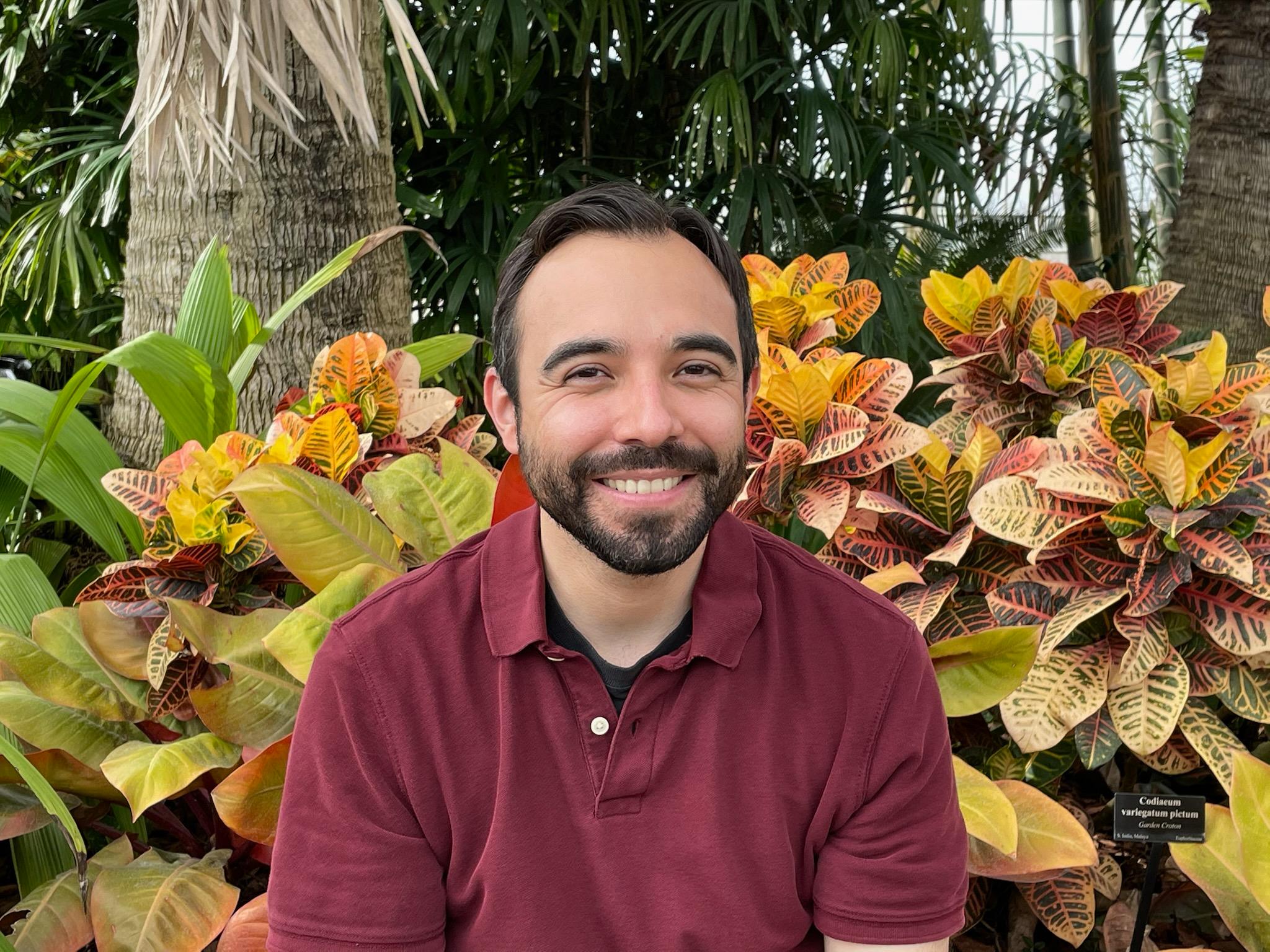
David Maestas is a K99 award winning postdoctoral associate studying vascular biomechanics and repair, but he's also well known for the work he does connecting people at the Center for Bioengineering and Biotechnology (CNBIO). Maestas joined us for a Q&A on his research, his path into bioengineering, and how he's helped build a stronger sense of community among his colleagues.
Q: Can you tell us a little about yourself and how you found your way into bioengineering?
"I'm originally from southern Arizona, and I came from a first-generation college household. I was also the first person in my family to earn a PhD. My path into science was anything but traditional. I started working in fast food and eventually became a general manager at Wendy's, where I ran a training store with more than 40 employees and several managers. I enjoyed leadership and working with people, but I reached a point where I wanted my career to contribute more directly to human health, so I made the decision to go back to school.
I entered higher education much later than most and with essentially no exposure to academia or research. I also had to learn how to work around dyslexia. For a long time, I assumed that the people making major scientific discoveries possessed some kind of innate ability that I didn't have, but over time, one of the most important things I learned is that expertise is built. It isn't a category of person you're born into.
The path wasn’t easy. I started at community college in remedial math, transferred to my local university, and eventually earned my PhD in biomedical engineering from Johns Hopkins University. While I had always had a passion for wound repair, it was during my doctoral training that I became deeply fascinated by immunoengineering and regenerative medicine, particularly the question of why some injuries resolve successfully while others progress toward chronic inflammation and fibrosis."
Q: What brought you to the University of Pittsburgh?
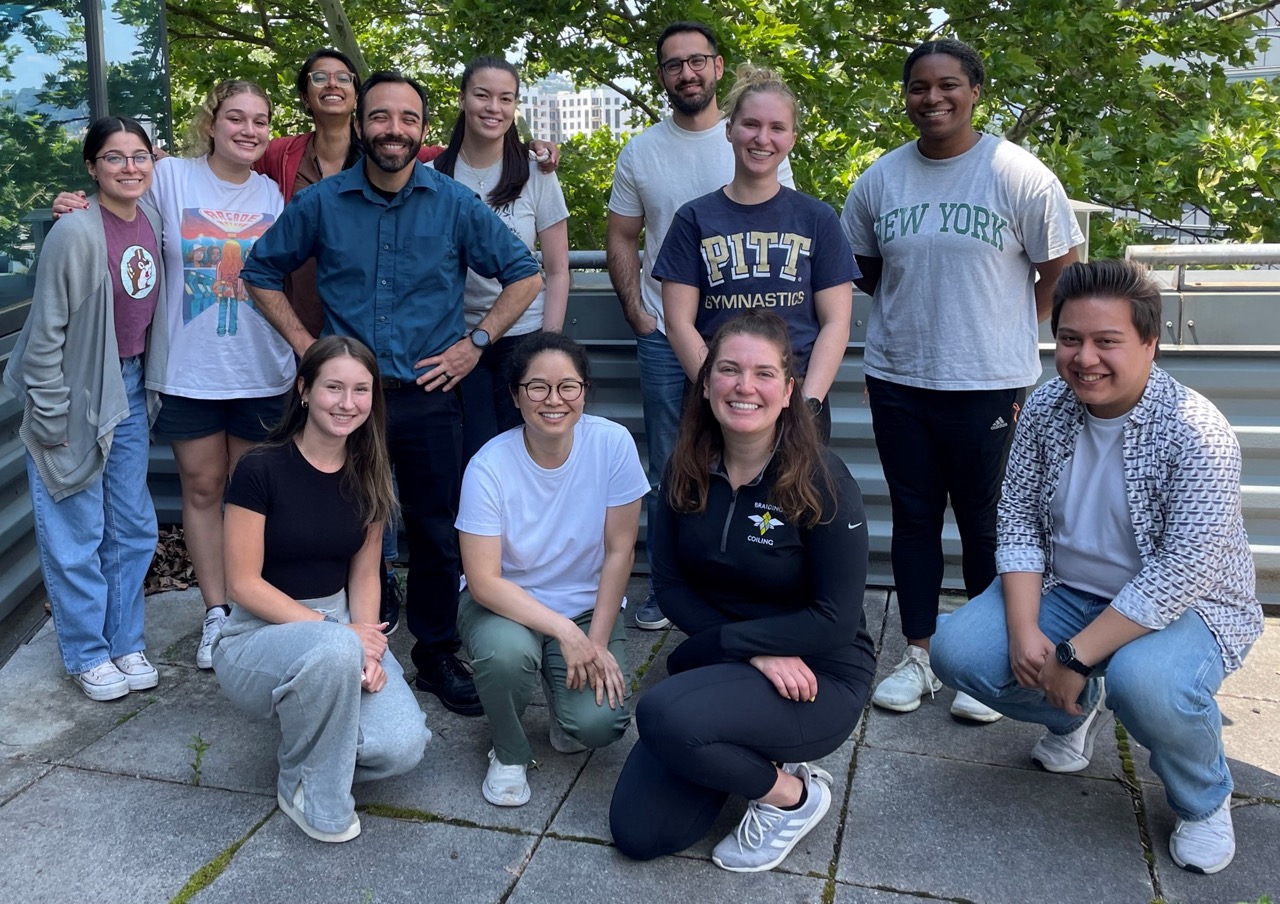
"Coming to Pitt was a very deliberate decision. By the end of my PhD, the world was recovering from COVID-19, I had lost loved ones, and I questioned whether one day running my own research lab was possible. I realized that if I had any hope of becoming an independent scientist, I needed the right environment to grow. I realized that what mattered most was that I received real training that I didn't yet have and an environment that could help me become the kind of independent scientist I wanted to be. Pitt stood out because of its depth in biomechanics, biomaterials, regenerative medicine, and translational research. Most of all, it felt authentic here.
I joined Jonathan P. Vande Geest's Soft Tissue Biomechanics Lab because biomechanics was a major missing piece in my training about functional tissues. Dr. Vande Geest gave me the opportunity to bring my background in immunoengineering and wound healing into a completely different scientific environment and learn vascular biomechanics, multiphoton imaging, tissue-engineered vascular grafts, and mechanobiology. That training helped me define my own scientific identity at the intersection of immunology, tissue biomechanics, tissue repair and remodeling, and immune-stromal feedback."
Q: What are you working on now?
"A lot of my current work asks a deceptively simple question: What happens when living vascular tissue meets an engineered material? If you implant a vascular graft, the artery and the graft immediately begin interacting. Cells migrate, extracellular matrix is deposited and reorganized, inflammatory signals change, and the mechanical environment evolves. Traditionally, we often see pieces of that process only at individual endpoints. I wanted to actually watch those trajectories develop.
That led me to develop a three-dimensional artery-graft culture platform that pairs living arterial tissue with engineered vascular grafts and uses multiphoton microscopy to repeatedly track cellularization and collagen remodeling over time. Our recently published work in Materials Today Bio showed that the system can resolve different remodeling trajectories and that aspects of the collagen microarchitecture we observe in culture parallel what we later see in long-term implanted grafts.
With the help and support of the BioE Department, Dr. Vande Geest, and Dr. William R. Wagner, I was recently awarded an NIH/NHLBI K99/R00 Pathway to Independence Award for my project, “Immunomechanically Tuned Vascular Grafts to Mitigate Diabetic Inflammation.” The project builds from my recent work to ask how diabetes-associated inflammation and tissue mechanics interact to disrupt vascular graft healing, and whether engineered grafts can be designed to help redirect those responses toward healthier repair.
The larger question I'm interested in is more about the mechanisms at hand: 'How do immune, stromal, and mechanical signals collectively determine whether injured tissue regenerates, repairs functionally, or scars?' That's the problem I ultimately want my independent laboratory to pursue."
Q: You're also involved in a lot of work outside your own research at CNBIO. How did that happen?

"Some of it probably comes from my first career. Managing a restaurant taught me very early that an organization can have extremely talented people and still perform poorly if communication, responsibilities and systems aren't working, and research environments aren't that different.
CNBIO contains an incredible concentration of faculty, trainees, technologies and expertise, but people working a few doors apart may still spend most of their time inside their individual laboratory ecosystems. I started working with Bioengineering administration and investigators to help bridge some opportunities: coordinating shared equipment and facilities, helping supervise student workers and core personnel, communicating with facilities and safety groups, and trying to make it easier for researchers to find resources and one another.
The part I'm most proud of isn't any one task. It's seeing people communicate differently. Labs are increasingly comfortable reaching outside their immediate groups to ask for equipment, reagents, knowledge or help. To me, it's really about the full picture; from ensuring that people are communicating, that critical equipment is in good shape, to things as small as making sure the microwaves are kept clean. To me, that is the real success. Shaping an environment where everyone can work and succeed together.
Outside my own research, I've also become involved in several parts of the BioE community. At CNBIO, I work with administrators and investigators on shared equipment, facilities, safety, and communication across laboratories. I also represent BioE on the SSOE Safety Committee and serve as the Tech Drive X Site Director and a co-investigator on the UPMC Hillman Cancer Center Academy, mentoring high school students involved and helping coordinate communication between students, mentors, and faculty."
Q: How do you balance that work with being a postdoctoral researcher?
"Well, I think I’m still learning balance, to be honest. I don't think balance is something you solve once. I see it as a lifelong journey as the demands change. My way of prioritizing usually comes down to two questions: Will this become a serious problem for my own work if I don't address it? And will it become a serious problem for other people if nobody addresses it? The second question matters a lot.
At the same time, I've learned that leadership cannot mean personally solving every problem. If one person becomes indispensable to every process, then that system isn’t sustainable. So my goal has been to create structures with clear responsibilities, shared resources, communication channels and expectations, so that they can all continue working without requiring someone to repeatedly rescue them.
Even very small things can contribute to that culture. Shared equipment processes, clearer signage, better-maintained common spaces, or simply helping someone figure out whom to contact can remove friction from people's days. Those things aren't glamorous, but collectively they shape whether an environment feels functional and collaborative. At the end of the day, it’s really about leaving things better than we found them."
Q: Are there people at Pitt who have been particularly important to your development?
"Absolutely. None of what I've done here happened without an entire village of great people. Jonathan Vande Geest has been central to my scientific development. He welcomed someone coming from immunoengineering into biomechanics and gave me room to learn, build new projects, mentor others and develop a scientific direction that can ultimately become independent from his own. That has been enormously important to me.
William Wagner has also become an important co-mentor. His experience in biomaterials, translation and academic leadership has pushed me to think beyond whether an experiment works and toward questions like: ‘Can this become a meaningful technology? How does an idea move toward translation? And what does it actually take to build a sustainable independent research program?’
Their formal K99 mentorship roles mirror their strengths: Vande Geest provides primary mentorship in biomechanics, imaging and vascular graft science, while Wagner contributes biomaterials, translation and academic-career guidance.
I also want to recognize Sanjeev G. Shroff. As the BioE Department Chair, he provided important institutional support so that my K99/R00 application even had a chance to succeed. He balances kindness with firm accountability, which makes him a great coach and an inspiring example.
Another thing this role at CNBIO has taught me is how much academic success depends on people whose contributions never appear on research papers. Glenn Peterson has been an incredible mentor and advocate and consistently looks for opportunities to bring people together. Kim Trost is one of those people whose name seems to come up whenever someone is trying to figure out how to make something happen. Alexis DelGrosso, Sally McKelvey, and Almaz Webneh have also repeatedly helped me navigate the countless administrative and institutional processes that researchers rely upon. I’ve learned that administrative work often becomes visible only when something goes wrong. When things work well, people rarely stop to ask who made that possible, so it is critical to remember the people who kept things running well."
Q: What do you enjoy outside of work?
"I took up running a few years ago and completed the Pittsburgh Marathon. I keep my running very casual, but love doing it because it clears my head and gives me a completely different kind of challenge.
I also enjoy cycling, especially with all of the trails around Pittsburgh, and spending time exploring the city with my partner. Places like the Phipps Conservatory, the museums, the Aviary, the inclines and the neighborhoods. I keep finding new places the more I explore this beautiful city.
Although I'm not sure it counts as being "outside of work," I also read a lot of regenerative medicine papers that have nothing to do with whatever experiment I'm doing that week. There are too many fascinating questions in biology to fit into one research project!"
Q: What's next?
"The K99/R00 is specifically designed to help blossoming scientists to make the transition from mentored training to research independence, so the next chapter for me is preparing to make that transition and establish my own laboratory. I want to build a research program at the intersection of regenerative medicine, immunoengineering and biomechanics."
The vascular graft work and the role of diabetes are important parts of that path, but the question I want to spend my career pursuing is broader: Can we identify the signals that control what injured tissues decide to become next? If successful, then the bigger question is whether we can deliberately steer those systems away from fibrosis and toward functional regeneration.
That is the kind of problem that will require engineers, biologists, clinicians, materials scientists and computational researchers working together. And, in some ways, that brings the science and the community-building work back to the same principle: complex systems work better when their individual parts communicate and reinforce one another."