
Four Bioengineering PhD Students receive NIH F31 Fellowships

Four Bioengineering PhD students at the Swanson School of Engineering will receive funding toward their studies in 2025, thanks to prestigious awards from the National Institutes of Health (NIH).
Predoctoral Individual National Research Service Award (F31) Recipients

Ian Eder
Eder is a 5th-year PhD student in the Cell Migration Lab advised by Partha Roy, professor of bioengineering. His research focuses on the relationship between the actin cytoskeleton and various diseases, including breast cancer and ALS. As an F31 recipient, Eder will look at the relationship between the actin cytoskeleton and the immune response in breast cancer. Specifically, Eder is investigating how dysregulation of the actin cytoskeleton affects the paracrine signaling of cancer cells, specifically their ability to either promote or inhibit immune cell migration into tumors.
“This question is particularly important because one of the key hurdles of immunotherapy in solid cancers is enabling immune cells to infiltrate the tumor microenvironment.” Eder said. “By exploring how changes in the actin cytoskeleton can be leveraged or targeted to promote immune infiltration, this research could help address a critical barrier in developing more effective cancer immunotherapies.”

Adam Forrest
Forrest is a 4th-year PhD student co-advised by Professors of Bioengineering Takashi Kozai and Jonathan Vande Geest. Forrest’s research focus is on the impact of altering biomechanical properties of tissues in disease states, as well as the role of glial cells in disease progression. His project for this fellowship will specifically focus on therapeutic ultrasound, which uses mechanical vibrations to modulate the brain’s neuroinflammatory response — boosting inflammation when it aids healing, but dampening it in cases of chronic inflammation. For Forrest, this topic combines his experience with both neuroscience and mechanobiology into one cohesive project.
“Ultrasound therapies seem very promising, so I’m excited about this because I love developing and testing new tools, being on the forefront of research, and possibly pushing these tools into being used clinically.” Forrest said. “This fellowship is a really important step for me to start my independent dissertation project and bring all my mentors together in one direction.”
Forrest also mentors high school students through the UPMC Hillman Cancer Center Summer Academy, guiding them on individual research projects and contributing to his site’s Education Team to design weekly programming that prepares students for college and introduces them to diverse science and research careers.
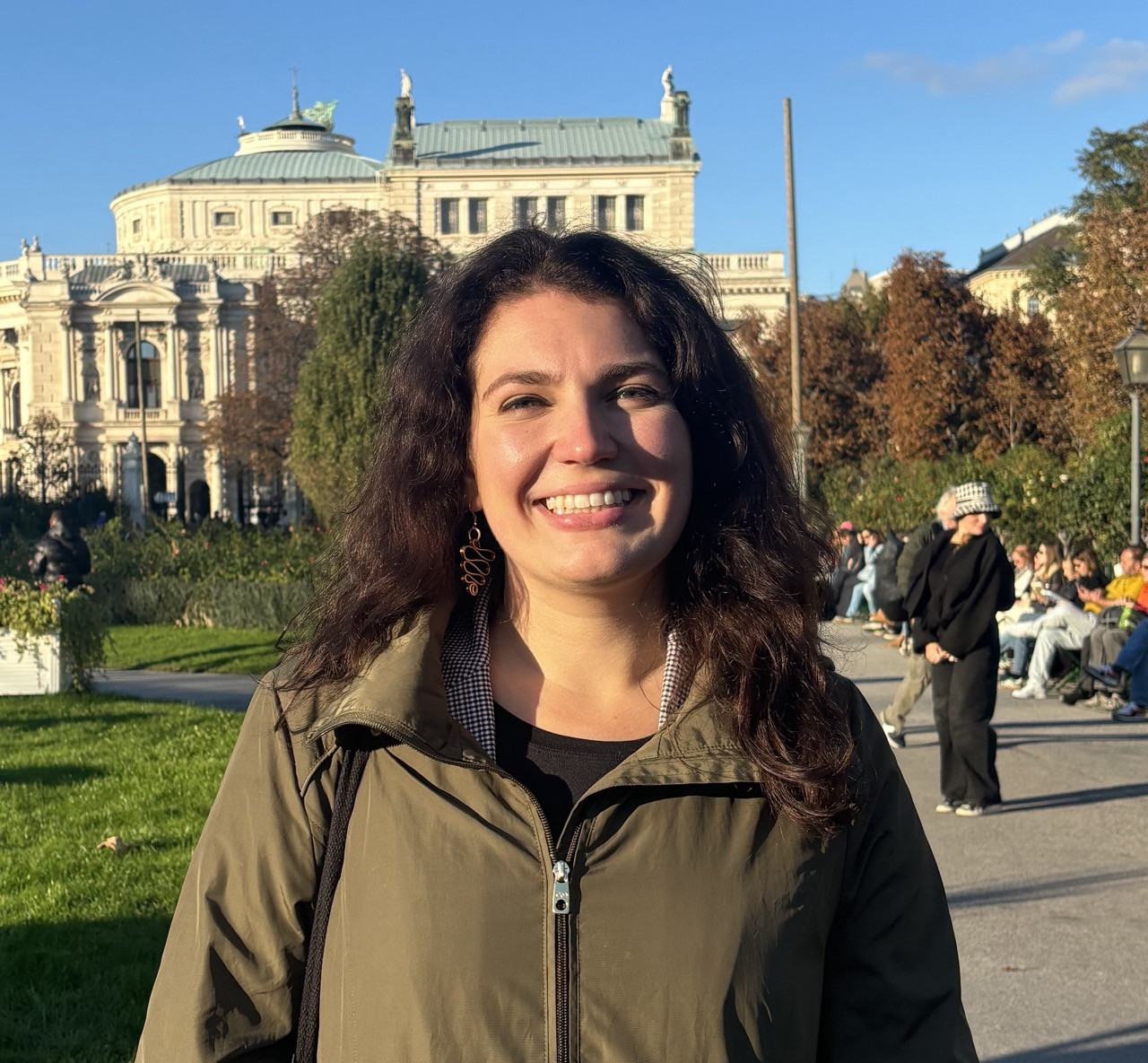
Katarina Martinet
Martinet is a 5th-year PhD student in the Tissue Engineering and Regenerative Medicine (TERM) track in the Soft Tissue Biomechanics Laboratory, advised by Jonathan Vande Geest, professor of bioengineering. Martinet’s research focuses on improving remodeling outcomes for small-diameter Tissue Engineered Vascular Grafts (TEVGs) with the goal of developing an off-the-shelf alternative to autologous vessel grafts for patients undergoing coronary artery bypass grafting (CABG) procedures.
Martinet specifically studies how vascular smooth muscle cells (VSMCs) — the cell type critical in graft remodeling — respond to different physiological conditions in small animal models. Her fellowship project specifically focuses on estrogen loss and its impact on VSMC behavior, since post-menopausal patients face the highest risk of complications following CABG procedures. By comparing male, female, and post-menopausal VSMC behavior, she hopes to uncover mechanisms that can guide more effective TEVG design. Martinet is also a T32 trainee in the Cardiovascular Bioengineering Training Program (CBTP), a volunteer with Biobots, and on the Ingenium Graduate Student Review Board.
“I think receiving this fellowship will make the transition into academia smoother.” Martinet said. “It has given me insight into what the NHLBI looks for in an applicant and the freedom to pursue a side project I’m passionate about while also strengthening my prospects for future NIH funding.”

Sharada Narayanan
Narayanan is a 4th-year PhD student in the Neural Tissue Electrode Interface (NTE) Lab advised by Xinyan Tracy Cui, professor of bioengineering. Her research focuses on investigating the immune response to neural implants on a cellular and biochemical scale and designing electrochemical sensors to probe the chemical mechanisms of neural diseases and injury. Through her F31 fellowship, co-sponsored by Dr. Fatima Syed-Picard, assistant professor in the School of Dental Medicine, Narayanan is developing multi-modal electrochemical sensors to characterize nerve innervation and immune functions of a novel self-assembling tooth root organoid. She has also served as the Graduate BMES outreach chair, reviews submissions for Pitt’s undergraduate research journal Ingenium, currently serves as Outreach Chair for Graduate Women in Engineering (GWEN), and is a member of the Journal of Neuroscience Early Career Researcher (ECR) Advisory Board.
“I worked with my advisor and co-sponsor to craft a project that combined my experience and interest in designing sensors with my desire to explore organoid development. This collaboration would not be possible without F31 funding to support it.” Narayanan said. “I have always had a strong interest in organoid characterization using novel tools, so this project will provide hands-on experience that will support and inform my future career choices.”