
Pitt Space Boldly Going into STEM Education—and Beyond
Countless movies and TV shows—from Stars Wars and Star Trek to The Martian and The Mandalorian—continue to inspire a fascination with space and ignite an interest in STEM. But what about high-powered 3D printers and electron microscopes? Or actual engineers who created components currently aboard the International Space Station (ISS)? Could they lead the next generation of space engineers to STEM-related research and careers?
STEMnetX, an initiative supported by the Pittsburgh-based nonprofit Chance to Change Lives (CCL-US), believes they can. Through its collaboration with Pitt Space at the University of Pittsburgh, STEMnetX has launched its Space Engineering Pathways program to inspire under-resourced undergraduate students from across the Mid-Atlantic to set their sights on the stars. Now in its second year, the program welcomed its cohort on May 12 and immediately illuminated pathways to a career in STEM and space engineering.
“Many under-resourced college students who might be interested in space don’t experience many opportunities to see themselves as scientists. Many don’t know about research and space-related STEM careers,” said Rama Bala, a faculty member in the Pitt Space program and the President and CEO of STEMnetX.
This year, fourteen students from community colleges and four-year institutions across the Mid-Atlantic and as far as the Midwest, including the University of Pittsburgh, traveled to Washington & Jefferson College, in Washington, PA, to attend a week-long immersive introduction to STEM-related research and careers.
During this “bootcamp,” students took a crash course in Python coding each morning, and then in the afternoon they explored topics such as quantum computing, biotechnology, and space engineering. Students learned about networking, delivering elevator pitches, developing their resumes, and creating LinkedIn profiles.

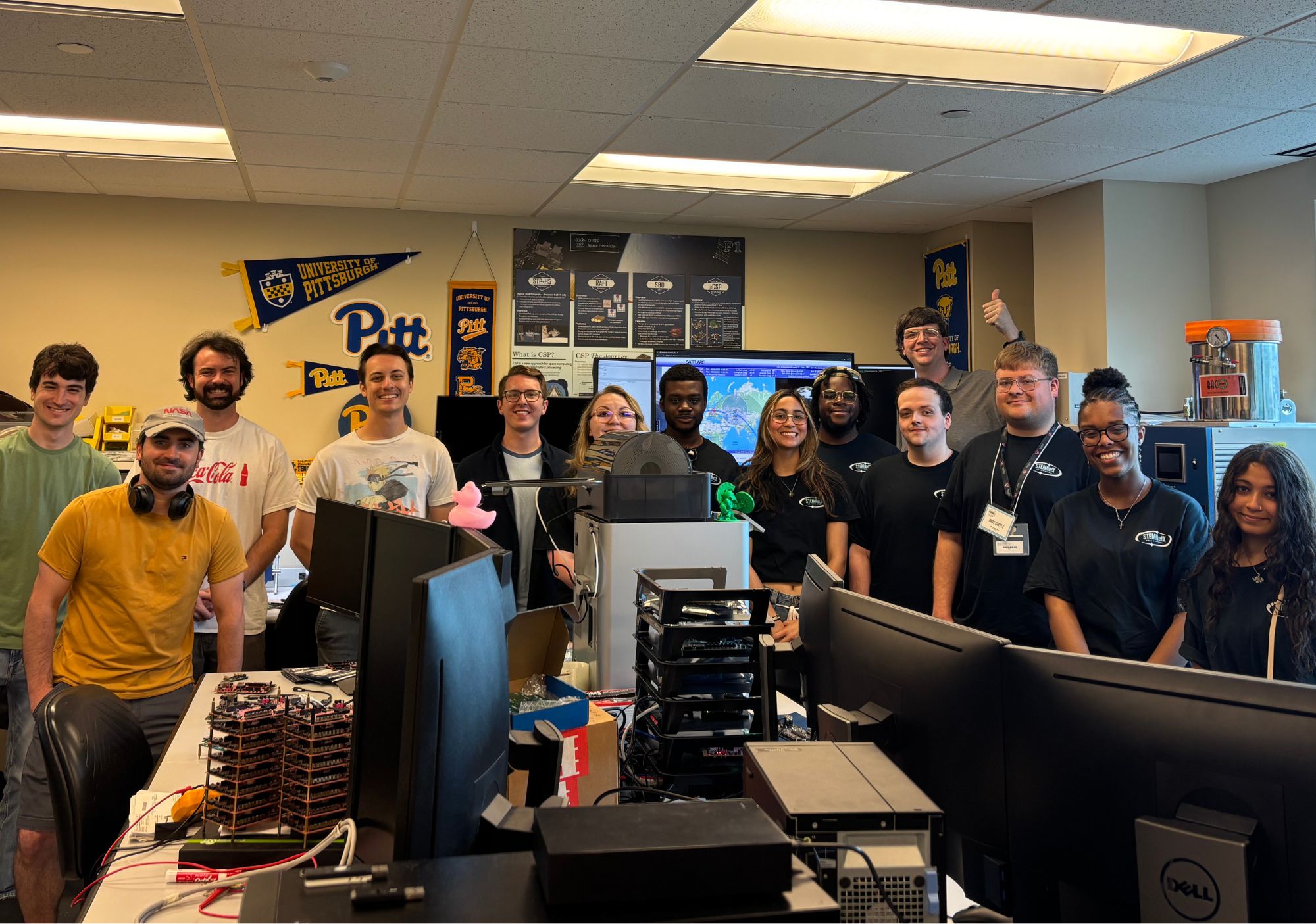
On Thursday, May 15, the students visited the University of Pittsburgh to meet space engineers and to see space-related STEM in action. They began their tour at the Space, High-Performance & Resilient Computing (SHREC) facility, a National Science Foundation Center on the Pitt campus. The fellows met with graduate students who shared their research and showed them the technology designed at Pitt and currently aboard the ISS.
“We scheduled 30 minutes, but after the hour, I had to shepherd the students out—that’s how engaged they were,” said Bala. “For many of these students, this was their first time in a research facility.”
The tour continued to Benedum Hall, where students met faculty in the Pitt Space program and learned about pathways to research and careers in space engineering and related fields.
Next, the cohort visited Dr. Wei Xiong’s Physical Metallurgy & Materials Design Laboratory to see state-of-the-art 3D printing in action. Again, a planned 30-minute tour lasted over an hour. “It was incredible to see the level of engagement—and for them to see 3D metal printing and learn about its intricacies.”
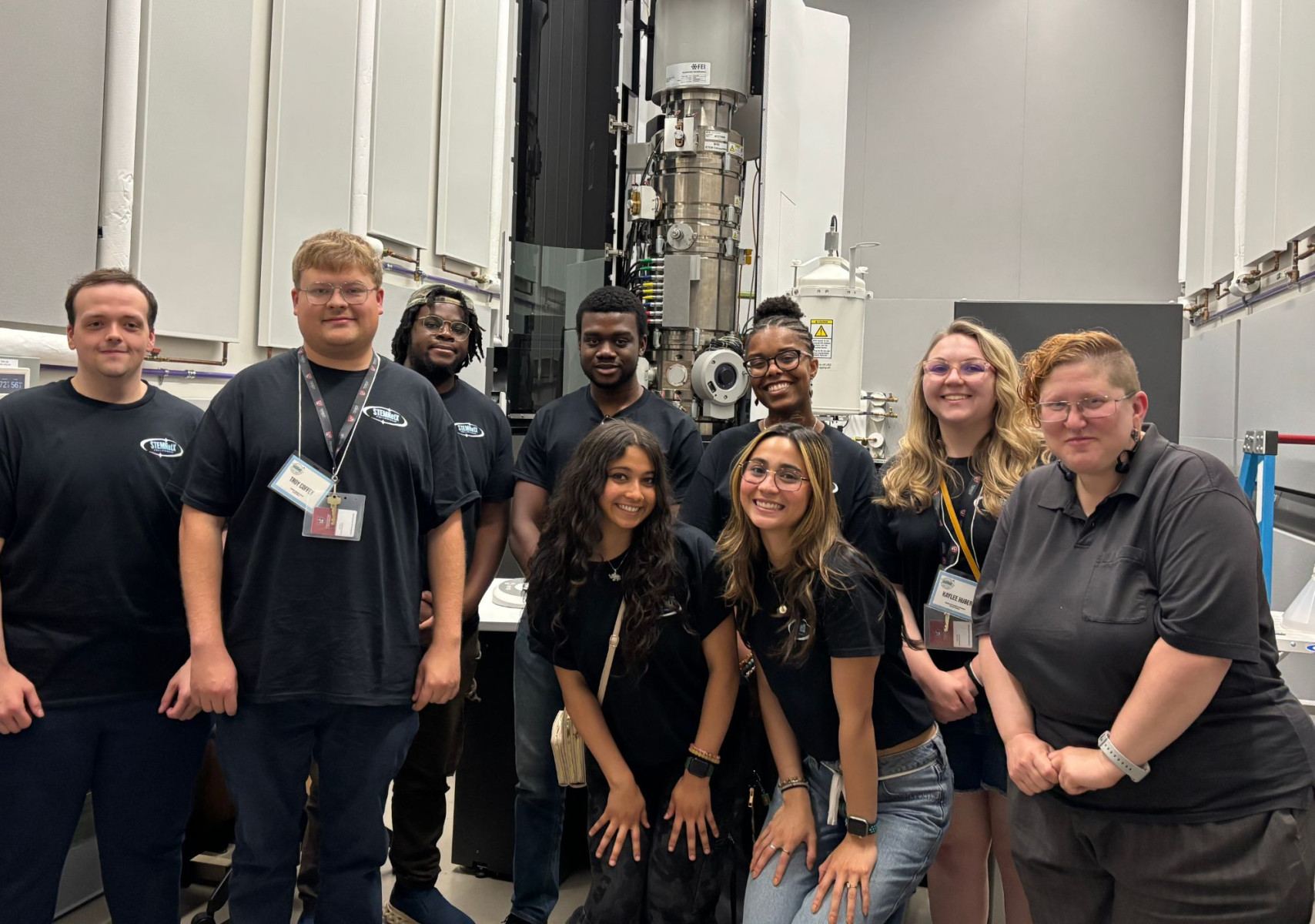
At the Gertrude E. & John M. Peterson Institute of NanoScience and Engineering, JosephAnna Barr, the administrative coordinator at the lab, introduced students to advanced microscopy and showed them both atomic and electron microscopes. Two Pitt researchers happened to be conducting image analysis, and they engaged with the students.
“It was amazing how accessible the researchers were with the students,” Bala said. “And the students, in addition to seeing research in action, were learning how to talk with scientists. They were building their career-development skills.”
As Bala noted, “When we drove back from the tour, students were saying, ‘I never thought about graduate school as an option until now.’”
On Friday, the cohort celebrated their week together immersed in STEM. Throughout June and July, they will continue to engage with experts through virtual workshops and networking.
Through funding from RK Mellon Foundation, these fellows received a $500 stipend and travel reimbursement. Fellows can also apply for grant funding up to $5,000 to conduct their own research. Those interested in continuing with the program can serve as STEM ambassadors and visit their local elementary, middle, and high schools.
“We want these students to see themselves as future STEM leaders as they motivate a new generation,” said Bala. “We want to foster in these students a sense of belonging—you know, where they can say, ‘Here is a group of students like me.’”