
DPT/PhD Student Spotlight: Q&A with Anna Bailes
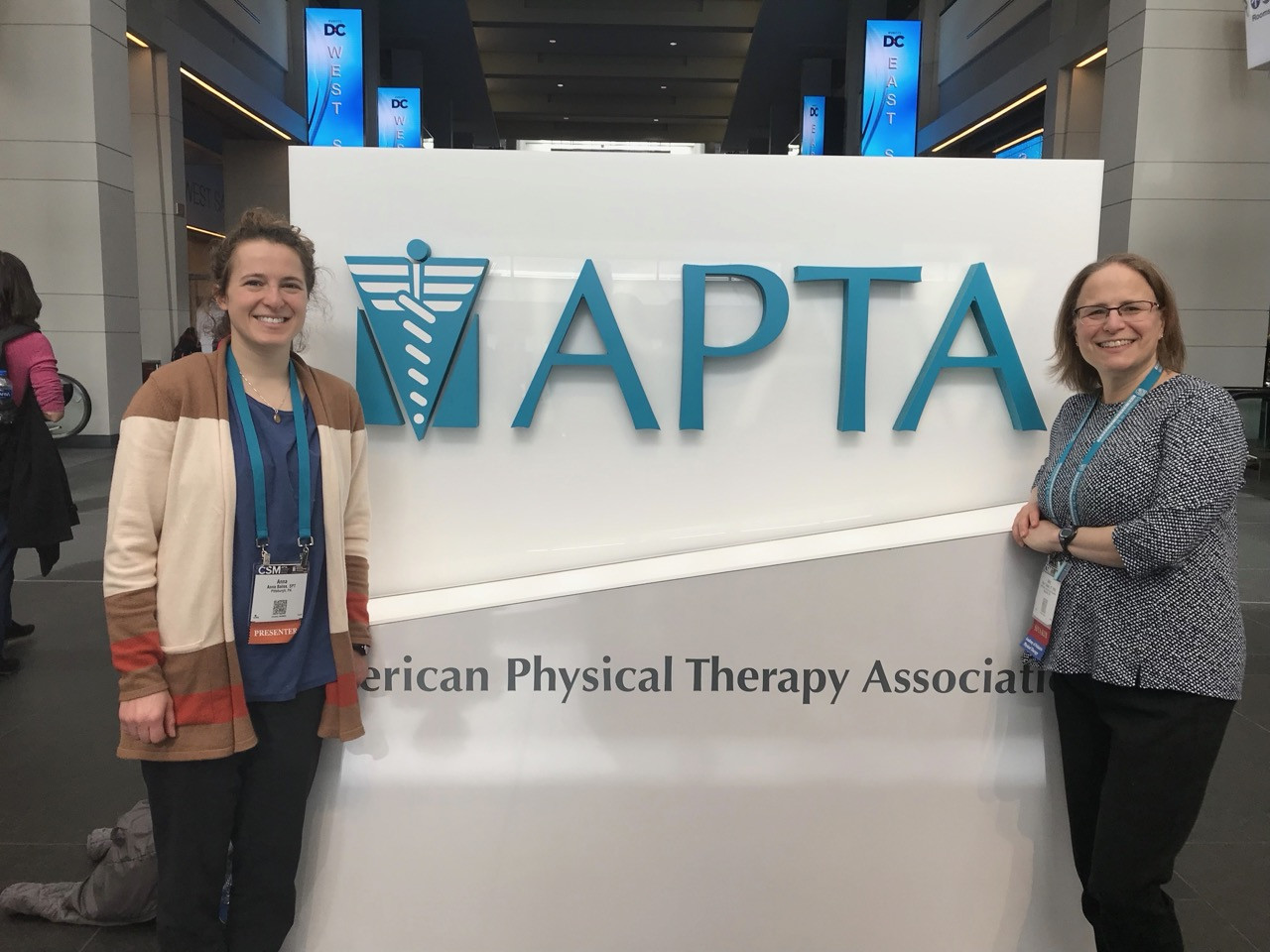
After graduating from Washington University in St. Louis with a BS in bioengineering, Anna Bailes joined the University of Pittsburgh’s Doctor of Physical Therapy (DPT) - PhD in Bioengineering (DPT/PhD) program at the School of Rehabilitation Sciences and the Swanson School of Engineering. In her last few months before defending her thesis and accepting a postdoctoral position in California, Bailes reflected on her experience in the program and gave some advice for prospective students.
Q: Can you tell me your full name and preferred pronouns?
Anna Bailes: Sure! I'm Anna Bailes, and I use she/her pronouns.
Q: What is your current research focus?
Anna Bailes: I have the opportunity to work in two different labs since I am co-advised for my PhD. I work with Dr. Gwen Sowa in the Ferguson Lab, where we study low back pain. Particularly, I am working with the LB3P project which is a large phenotyping study to identify subgroups of chronic low back pain patients with the purpose of developing more targeted treatments. My other advisor is Dr. Rakié Cham in the Human Movement and Balance Lab (HMBL). In HMBL we use motion tracking technology to study human movement impairments. I’m specifically focused on how pain-related psychological factors affect movement in people with chronic low back pain, especially looking at gait.
Q: What made you consider this program?
Anna Bailes: Toward the end of undergrad, I realized that I was only really interested in the rehabilitation and biomechanics aspects of bioengineering. So then I started googling—and I ultimately came across both Pitt and Northwestern’s DPT- PHD programs, and that's when I realized that this was the type of bioengineering I wanted to pursue.
Q: What made you choose Pitt?
Anna Bailes: I chose Pitt because I felt more comfortable in the city and the university. It felt very down to earth and welcoming, and just like somewhere that I could imagine myself being. I also really liked the variety of research they had here. They did a lot of really cool neural and stroke related research at Northwestern, but those weren't really things that I was interested in. When I toured here, there were three or four labs that I was really interested in, so I felt like I would have a lot of options to choose from.
Q: What about the program at Pitt stood out to you?
Anna Bailes: Both the PT school and the bioengineering department at Pitt are incredibly strong, and I think being part of two robust departments was invaluable. I also had great mentorship throughout the program. Dr. Pat Sparto is the co-director of the program and is such a supportive mentor who looks out for you beyond just research. He was also extremely helpful throughout the application process when I was deciding to apply to the program. Additionally, doing both the DPT and PhD at the same university allowed me to build long-term connections with faculty in both departments, which has been beneficial for my education and career.
Q: Why pursue both a DPT and a PhD, not just one or the other?
Anna Bailes: My mom is also a physical therapist and got her PhD while I was in high school and college, so I had some insight into the world of PT research. So I knew what research was like, and she introduced me to some different people that she worked with. As a practicing PT, I find clinical practice and research each differently exhausting, so it’s nice to have both of them so I can switch my brain into different ‘modes.’ I don't think I could just do one. I really like being able to do both, because I can directly help individuals in the clinic, and then also make an even larger impact by trying to improve interventions through research.
Q: What advice would you give to prospective students considering this program?
Anna Bailes: First, really think about whether you want to pursue an engineering PhD or a movement science/kinesiology PhD. Engineering opens a lot of doors, but you should make sure it aligns with your long-term goals. Also, know that your time will be different from your PT classmates—you’ll be juggling PhD work on top of PT school. It’s a lot, but it’s also rewarding. You’ll find that being able to speak both clinical and engineering “languages” makes you a valuable asset in the field, so that’s something to keep in mind when deciding.
Q: Is there anything else you’d like to add or anything I didn’t ask about?
Anna Bailes: One thing I’d add for prospective students is that Pitt is flexible about the PT school requirements. If you’re coming from an engineering background and don’t have all the required shadowing hours or certain prerequisites, they’re willing to work with you. Also, when choosing a mentor, focus on finding someone supportive, not just someone who has an interesting project. Projects change, but a good mentor will guide you throughout your entire journey.
Q: Your thesis defense is early next year, and I hear you have a postdoc offer lined up.
Anna Bailes: Yes! I’ve been offered a postdoctoral position at Stanford where I’ll be working on a project using wearable sensors to improve monitoring and interventions for youth and adolescents with chronic pain. I’m also hoping to work in their pediatric pain clinic as a PT. I’m excited to dive more into the psychological aspects of pain and to work on more clinical trials and intervention research.